
Services · Painting and finishes
Painting, cabinet finishes and trim for Chicago remodels.
Paint and finish work is the last trade in and the one that decides how everything before it reads. It covers the cabinet finish, which is chosen months earlier and applied in a shop or on site, the walls and ceiling, the trim and millwork, and the patching that an older Chicago house needs once the old kitchen comes out. This page covers the choices, the sequence and what moves the cost.
At a glance
What paint and finishes mean for cost and time.
Inside a complete kitchen remodel with Lakefront Interiors, typically $40,000 to $125,000 before selections, wall and trim painting is a small line and the cabinet finish is part of the cabinet price: a painted cabinet door costs more than a stained one, and a custom color more than a catalog color. In a bathroom remodel, typically $35,000 to $100,000, painting is a few days at the end, and any wainscoting or millwork is priced with the carpentry.
Painting happens in the last week or two of a construction stage of six to ten weeks for a kitchen or three to five for a bathroom, after drywall and before the fixtures and hardware go on. The figures are planning guidance as of September 2026, not a quote.
How we work
Chosen with the cabinets, applied in the right order.
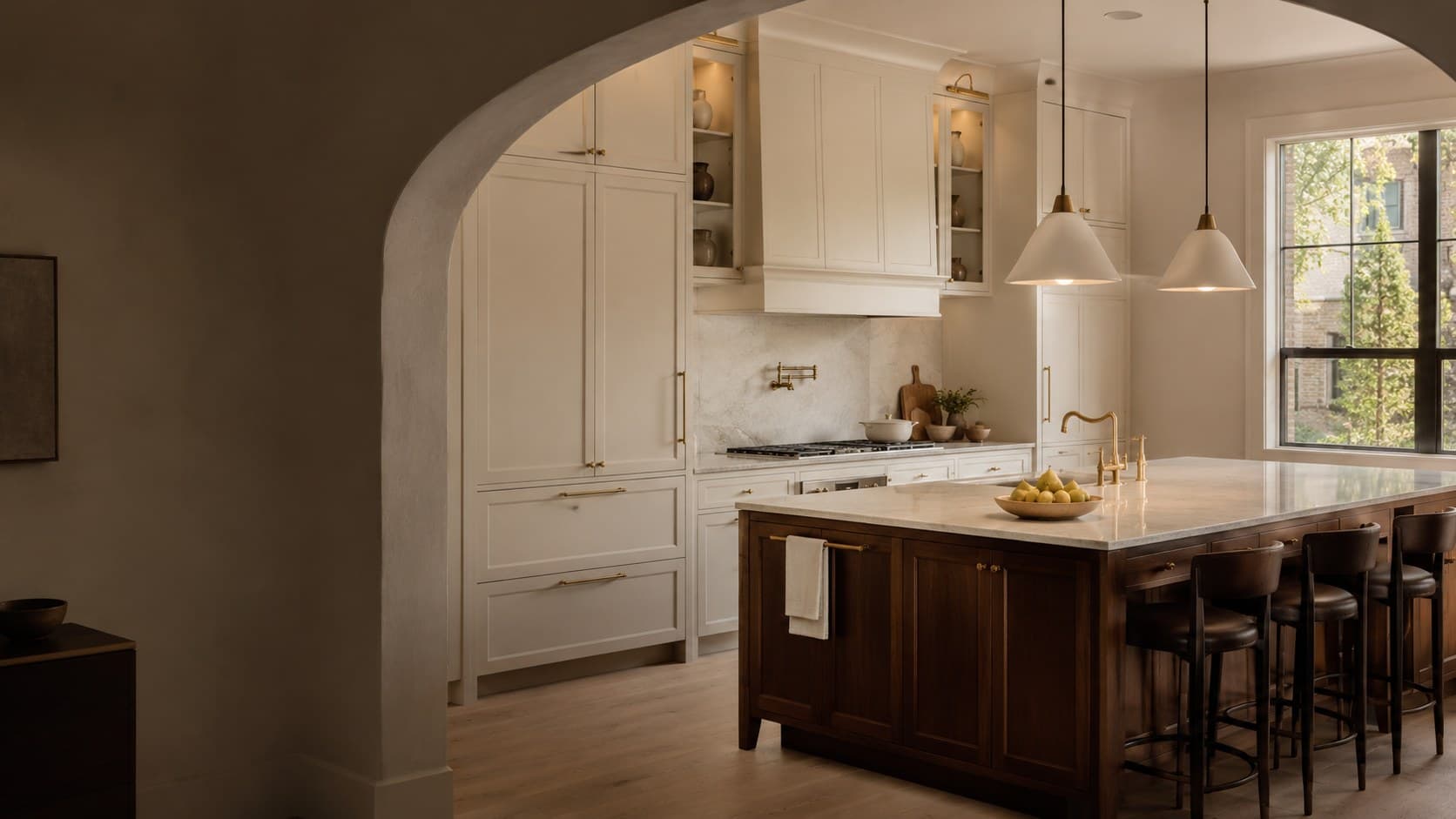
The palette is decided in design, when the cabinet finish, the countertop, the tile and the wall color are looked at together in your room’s light. Cabinet finishes are applied in the cabinet shop in almost every project we build, because a sprayed factory finish is harder and more even than what can be done in a house; site painting of cabinetry is reserved for built-ins and trim that have to be finished in place.
Walls and ceilings are painted after drywall and skim coating and before the fixtures, hardware and appliances go on, so nothing has to be masked twice. Trim, casings, crown and any wainscoting are installed, filled and painted in the same window. Touch-ups happen after the walkthrough, when the last trade has left the room.
On its own? If you want a room painted, or existing cabinets repainted, with nothing else changing, a painting contractor will do it faster and for less. We handle painting and finishes as part of a complete kitchen or bathroom remodel.
Decisions
The finish decisions in a remodel.
Cabinet finish first, since it takes the longest and anchors the rest.
- 01
Cabinet finish: paint or stain
A painted finish gives any color and shows joints over time as wood moves; a stain or a clear finish shows the grain and hides movement. Both are sprayed and cured in the shop. Painted maple and stained white oak or walnut are the most common choices in our work.
- 02
Factory or site finish
Shop-applied catalyzed finishes are harder, more even and cure faster. Site painting suits built-ins, shelving and trim that are assembled in place. We tell you which each piece will get and why.
- 03
Wall paint and sheen
A washable matte or eggshell on kitchen walls, a moisture-resistant finish in a bathroom, and a flat ceiling. Colors are sampled on the wall beside the cabinet door and the tile before they are chosen.
- 04
Trim, casings and crown
Whether the new kitchen keeps the house’s original casings or replaces them, how the crown meets the cabinets, and whether a light rail hides the under-cabinet strips. Drawn on the elevations with the cabinets.
- 05
Wainscoting and millwork
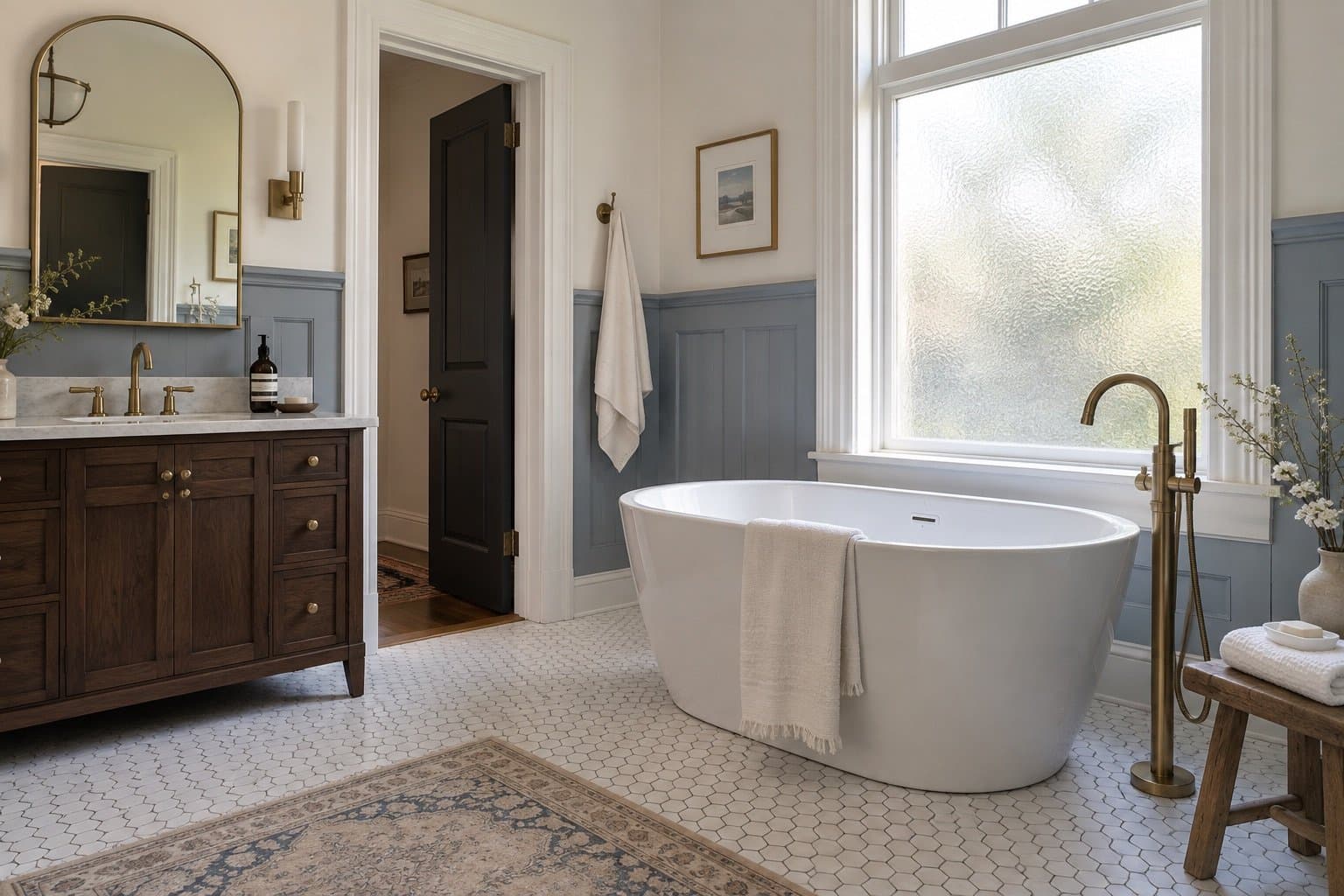
Beadboard or panel wainscoting in a bathroom, a paneled refrigerator wall, open shelving, a built-in bench. Carpentry that is finished in place and priced with the trim.
- 06
Plaster and patching
Old kitchens come out and leave plaster that has to be repaired or skim-coated before paint will look right. Older houses also raise lead-paint questions, which we plan for rather than discover.
Decision aid
Painted or stained cabinets?
The most common finish question we hear, answered by how the kitchen will be used.
Scroll the table sideways to see every column.
| Aspect | Painted | Stained or clear |
|---|---|---|
| Look | Any color; solid, even surface | Wood grain visible; warmer |
| Wear over time | Hairline joints show as wood moves; chips show | Movement hidden by grain; scratches blend |
| Touch-up | Matched paint; noticeable on a large flat door | Easier to blend |
| Relative cost | Higher for the same door | Lower; premium species cost more |
| Best when | The color is the point, or the room needs brightness | You want the wood to show and the kitchen gets hard use |
Two-tone kitchens, a painted perimeter with a stained island, are common in our work and cost between the two.
In the four stages
Where painting sits in the schedule.
Decided early with the cabinets; done last, when the dust has settled.
- 01
Design and decisions
The cabinet finish, wall color, trim profile and sheen are chosen together, sampled in your room’s light.
- 02
Cabinet finishing
Applied in the shop while rough-in happens in the house; the cabinets arrive finished and are protected during installation.
- 03
Drywall and skim
After inspections and drywall, walls and ceilings are patched, skim-coated where the old kitchen left plaster damage, and primed.
- 04
Trim and paint
Casings, crown and wainscoting go in and are filled; walls, ceiling and trim are painted before fixtures and hardware.
- 05
Touch-up
After the walkthrough, when every other trade is finished, the last marks are touched up.
Cost and schedule
What moves the finish number.
Cabinet finish and millwork first; wall paint is the smallest part.
- Cabinet finish
- Paint costs more than stain on the same door, and a custom color more than a catalog one.
- Millwork
- Wainscoting, a paneled wall, crown and built-ins add carpentry and site finishing.
- Plaster condition
- Skim-coating whole walls in a vintage kitchen takes days that a drywall room does not.
- Lead-safe work
- Homes built before 1978 may have lead paint, and federal rules govern how it is disturbed; testing and containment are planned in.
- Ceiling height and detail
- Tall rooms, coffered ceilings and original trim add surface and time.
- Adjacent rooms
- Repainting the dining room the kitchen now opens to is often worth it and is a separate line.
Chicago
Finishes in Chicago homes.
Chicago’s older housing, the bungalows, two-flats, greystones and courtyard condominiums, is plaster over lath, often with original oak or painted casings worth keeping. Removing a kitchen from a plaster wall leaves damage that a skim coat fixes and paint alone does not, and we price the plaster work from the consultation rather than discovering it after demolition. Homes built before 1978 may carry lead paint under later layers, and we test and contain as the federal rules require.
The postwar houses in Skokie, Park Ridge, Northbrook and the western suburbs are usually drywall with simpler trim, which makes the paint stage shorter. In condominiums the association’s hours and the building’s ventilation decide when spraying and strong-smelling coatings can happen, so low-odor finishes and a schedule the building has approved are part of the plan.
Recent work
Recent projects that show this work.
Completed by the contractors on our team and labeled with the location and the contractor.
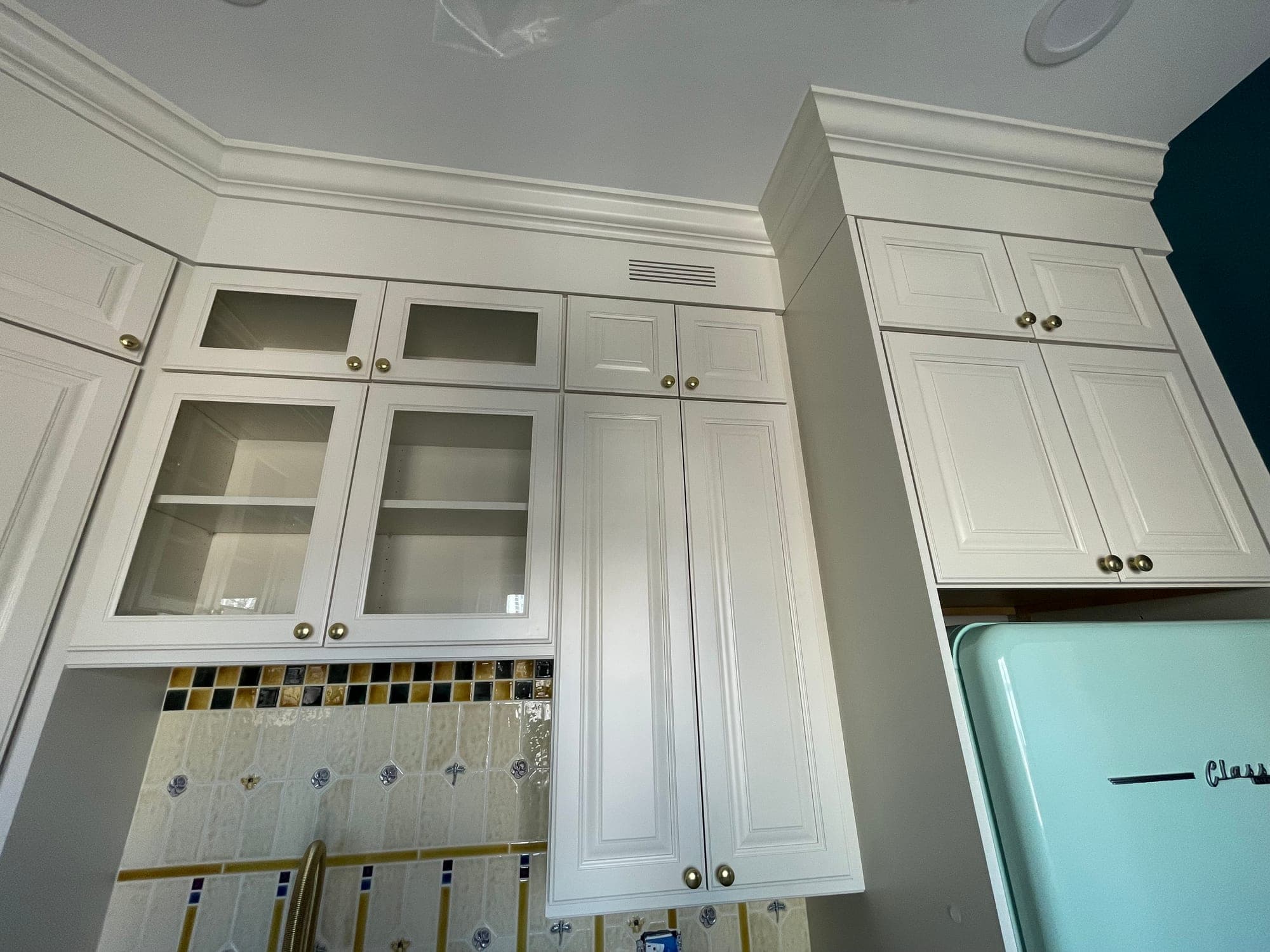
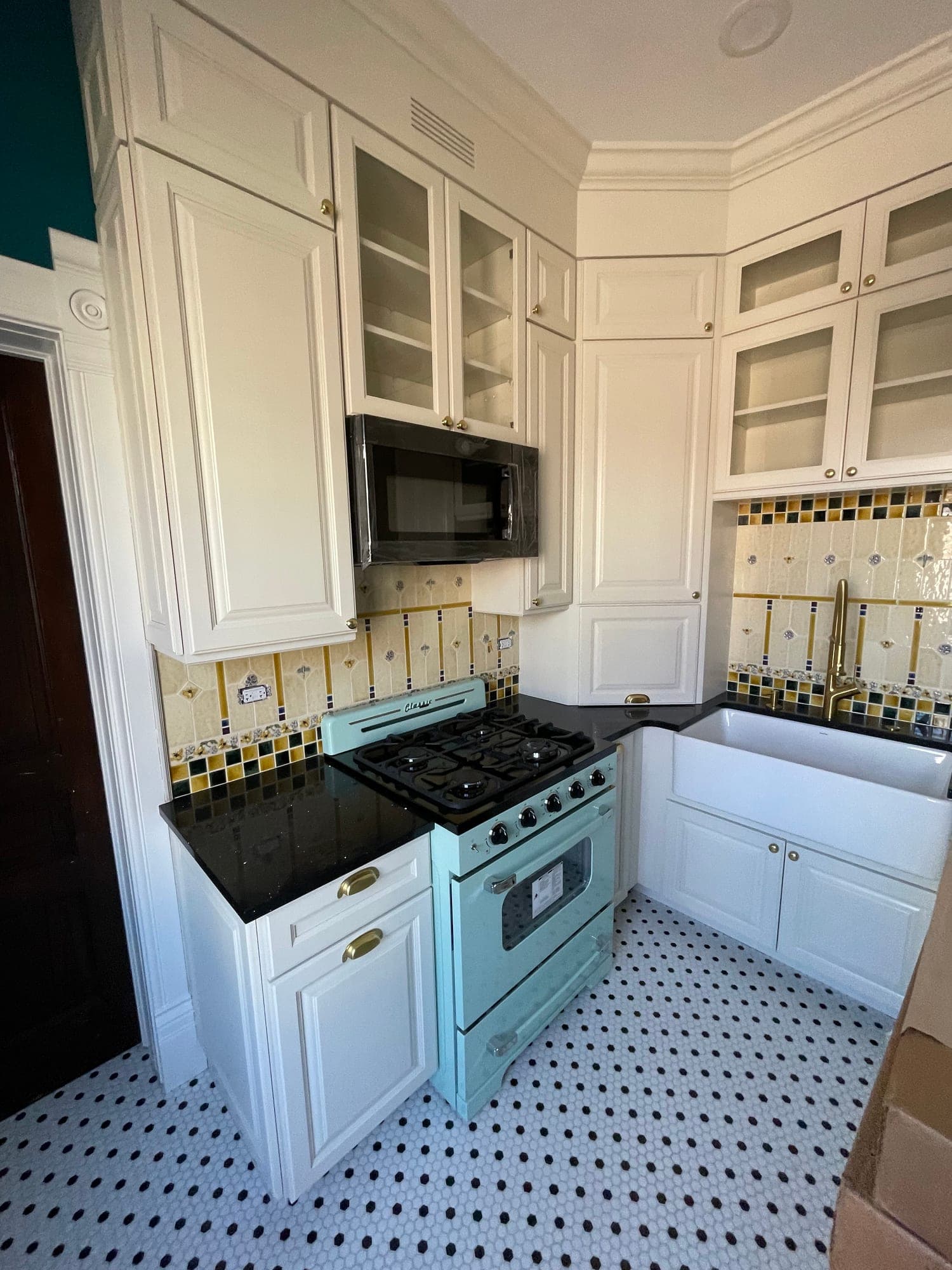
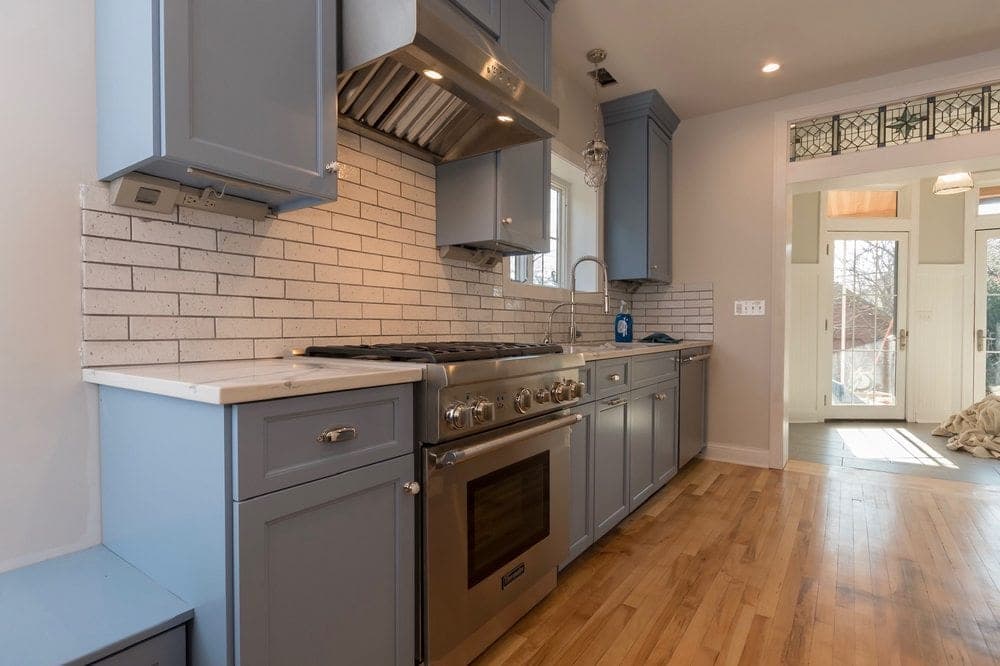
- 2 photosChicago Vintage Kitchen with Mint Rangeby TomSee the project
- 2 photosGlencoe Blue Shaker Kitchenby ChrisSee the project
Questions
Common questions about painting and finishes.
Are the cabinets painted on site or in a shop?
In a shop, in almost every project. A sprayed, catalyzed factory finish is harder and more even than a site finish. Built-ins, shelving and trim that are assembled in place are finished on site.
Will painted cabinets show wear?
Over years, hairline lines can appear at joints as wood moves, and chips show more than on a stained door. A durable shop finish and painted maple rather than a softer species keep it to a minimum. Stained wood hides wear better.
Do you test for lead paint?
In homes built before 1978, yes. Federal rules govern how lead paint is disturbed, and we plan testing and containment into the schedule rather than finding it during demolition.
Do you paint rooms on their own?
No. A painting contractor will do a single room faster and for less. We handle painting and finishes as the last stage of a complete kitchen or bathroom remodel.
Let’s plan the whole room.
Have photos of your kitchen or bathroom? Include them with your inquiry for complimentary render previews within minutes. Photos are optional.
Prefer to talk first? Call or email during business hours.
- Call
- (312) 210-0016
Related
- All remodeling servicesEvery trade inside a kitchen or bathroom remodel, on one page.
- Custom cabinet designWhere the cabinet finish is chosen.
- Design and selectionsThe palette, sampled in your room’s light.
- Tile and backsplashThe other finish the wall color has to agree with.
- Living through a kitchen remodelDust, fumes and the last week of the job.