
Services · Countertops
Kitchen countertops for remodels in Chicago.
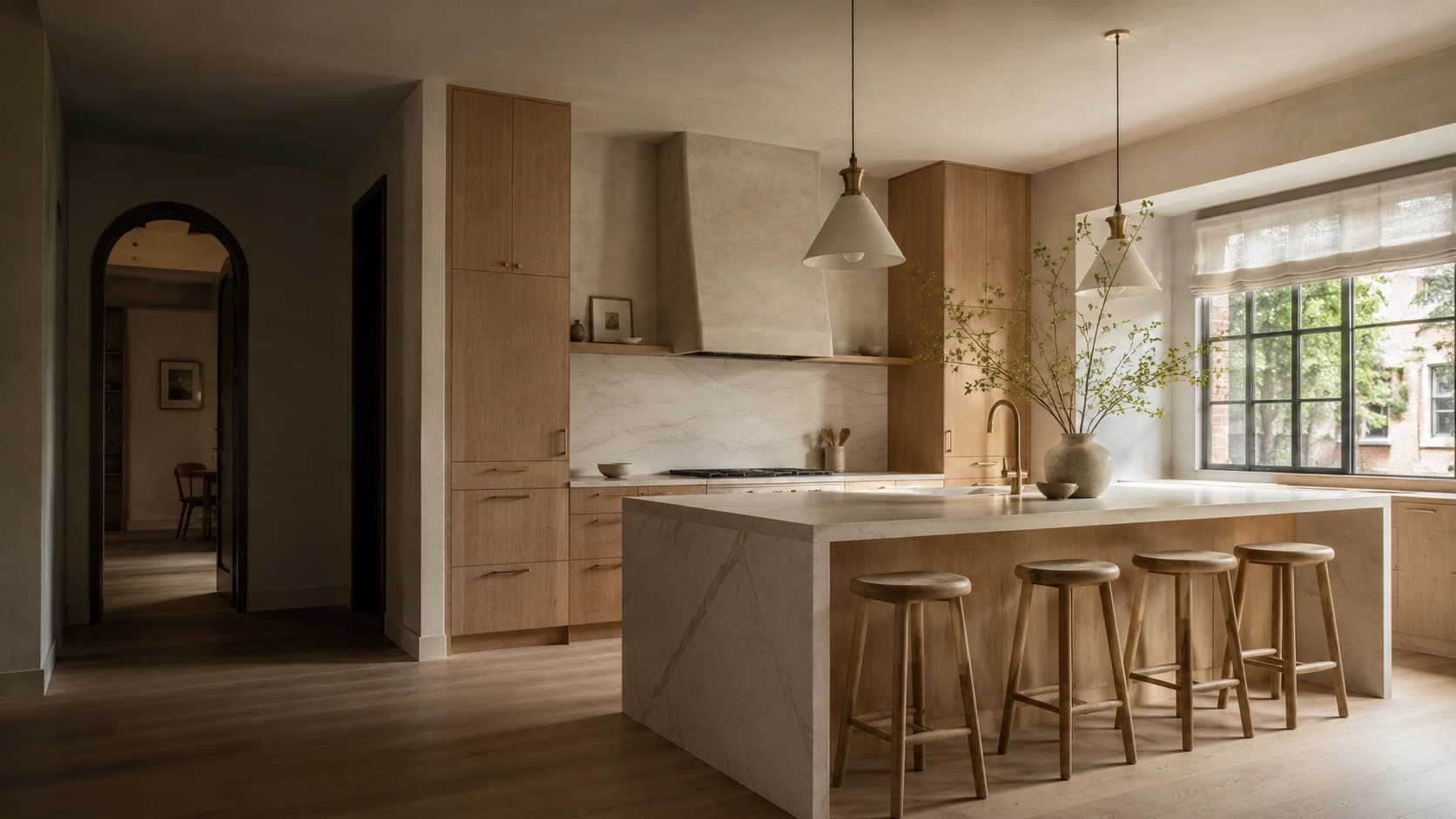
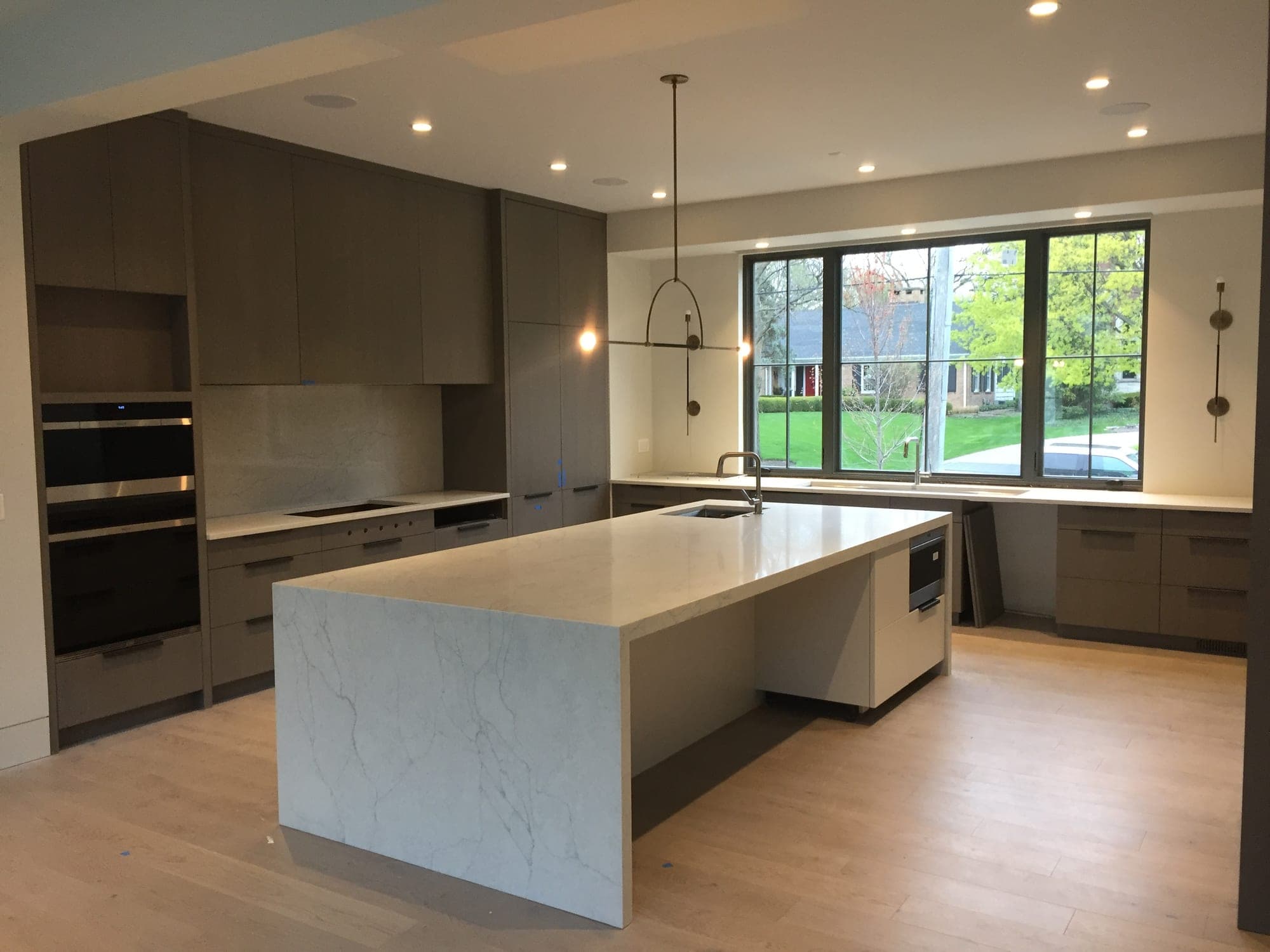
Countertops are the surface you work on, and the choice between quartz, quartzite, marble, granite, butcher block and porcelain is as much about how you cook as how the kitchen looks. We help you choose the material, select the slab, decide edges, seams and a waterfall, and template only after every cabinet is fixed. This page covers the materials, the sequence and what moves the cost in a kitchen remodel near Chicago.
At a glance
What countertops mean for cost and time.
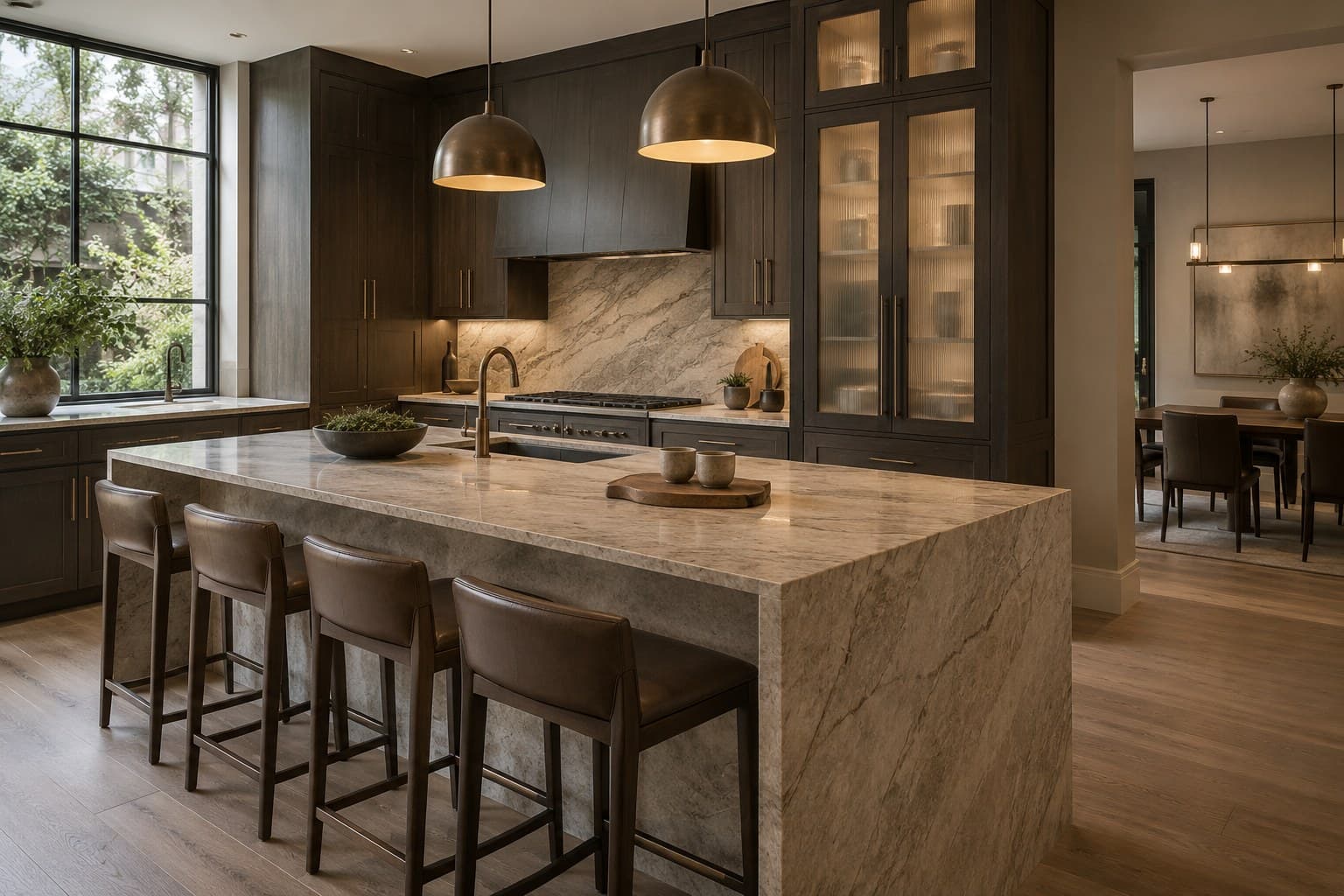
Inside a complete kitchen remodel with Lakefront Interiors, which typically falls between $40,000 and $125,000 before selections, countertops are usually a mid-sized line that swings with the material: a standard quartz is the baseline, quartzite and marble slabs cost more, and a waterfall island or a full-height stone backsplash adds fabrication.
Countertops are templated after the cabinets are installed and typically arrive one to two weeks later, which is why most kitchens have a short pause between cabinet installation and the sink going back in. Construction as a whole runs six to ten weeks. The figures are planning guidance as of September 2026, not a quote.
How we work
Chosen with the cabinets, templated after them.
The countertop is chosen alongside the cabinet finish and the backsplash, because the three are seen together and a veined stone can fight a busy tile. For natural stone you select the actual slab at the yard, and we mark where seams and the sink cutout will fall on it so the veining runs where you want it. For quartz and porcelain a sample is enough, and the layout is drawn on the plan.
Fabrication is by countertop shops we work with regularly. They template with a laser after every cabinet is set and shimmed, cut and polish the slab, and install with our crew on site so the sink, faucet and cooktop go in the same day. Seams are placed where they are least visible and the edge profile is chosen with the door style.
On its own? If you only want the countertop replaced on cabinets that stay, a countertop fabricator will template and install directly and cost less than a design-build project. We handle countertops as part of a complete kitchen remodel.
Materials
The countertop materials we install most.
Each has a job it is good at. The comparison table below puts them side by side.
- 01
Quartz
Engineered from ground quartz and resin, consistent from sample to slab, and needing no sealing. The most common choice in kitchens we build. It handles daily use well but should not take a hot pan straight from the stove.
- 02
Quartzite
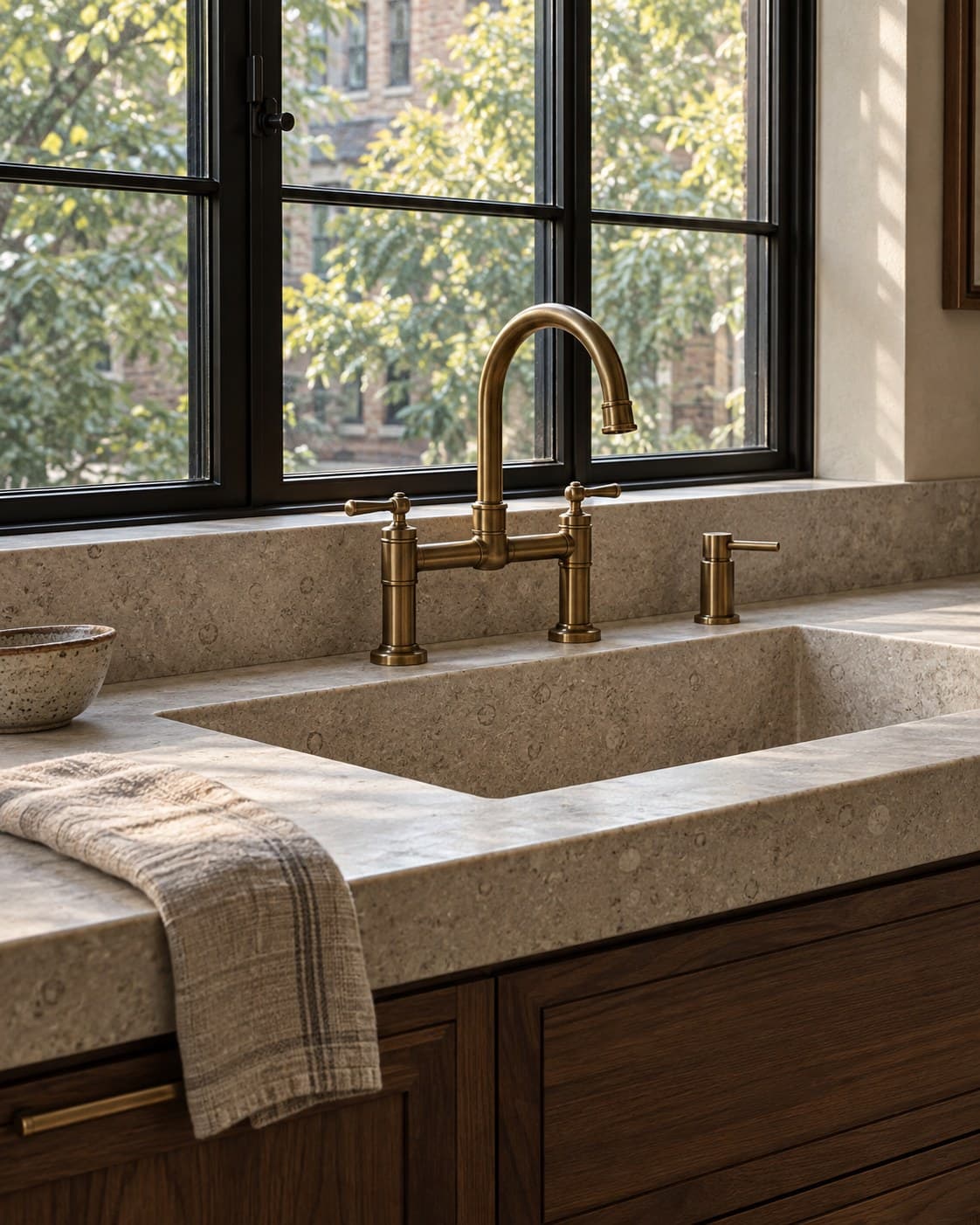
A natural stone, harder than marble and often with the same soft veining. It needs sealing and some care with acids, and it costs more than quartz, but it takes heat and shows the depth only real stone has.
- 03
Marble
Beautiful, cool for pastry work, and it etches and stains. Households that accept a patina love it; households that want it to look new in five years should choose quartzite or quartz. We say this plainly before you commit.
- 04
Granite
Durable, heat-tolerant and available in quieter patterns than its reputation suggests. Needs periodic sealing. Often the right answer for a kitchen that gets heavy daily use.
- 05
Butcher block and wood
Warm to look at and easy to refinish. Suited to an island or a baking counter rather than the area around the sink. Oiled finishes need upkeep; film finishes do not take knife work.
- 06
Porcelain slab
Thin, very hard, heat and stain resistant, and available in large formats that suit a waterfall or a full-height backsplash. Fabrication needs a shop experienced with it, and edges show the body of the material.
Decision aid
Countertop materials compared.
Relative cost is for a typical slab and edge; a rare stone or a complex layout changes it.
Scroll the table sideways to see every column.
| Aspect | Quartz | Quartzite | Marble | Granite |
|---|---|---|---|---|
| Sealing | None | Yearly or so | Yearly, and it still etches | Yearly or so |
| Heat | Use a trivet | Tolerates hot pans | Tolerates hot pans | Tolerates hot pans |
| Stains and etching | Resists both | Resists most; seal it | Etches with acid, stains if unsealed | Resists most; seal it |
| Consistency | Sample matches slab | Every slab differs; choose it in person | Every slab differs; choose it in person | Every slab differs; choose it in person |
| Relative cost | Baseline | Higher | Higher | Similar to quartz, wide range |
| Best when | Low upkeep matters most | You want stone and will seal it | You accept a patina | Heavy daily use and heat |
Butcher block and porcelain slab are covered in the list above; each suits a specific spot more than a whole kitchen.
In the four stages
Where countertops sit in the schedule.
The one trade that cannot be rushed ahead, because it depends on the cabinets being in place.
- 01
Design and decisions
Material, color and edge are chosen with the cabinet finish and backsplash. Sink style, faucet holes and cooktop cutouts are fixed on the plan.
- 02
Slab selection
For natural stone, you choose the slab at the yard and we mark seams and cutouts on it. Quartz and porcelain are confirmed from samples.
- 03
Cabinet installation
Every box is set level and fixed. Sink base, cooktop and any overhang supports are in place before the template.
- 04
Template and fabrication
The fabricator laser-templates the installed cabinets, then cuts and polishes the slab, typically over one to two weeks.
- 05
Installation and plumbing
Tops go in, then the sink, faucet and cooktop are connected, and the backsplash follows.
Cost and schedule
What moves the countertop number.
Material first, then square footage and the details that need extra fabrication.
- Material and slab
- Quartz is the baseline; a rare quartzite or marble slab can be several times the price for the same area.
- Square footage and seams
- Long runs and large islands may need two slabs, and a slab’s size decides where the seam falls.
- Waterfall edges
- A waterfall island adds a vertical slab, mitered corners and veining matched down the side.
- Edge profile and thickness
- An eased edge is standard. Mitered thick edges, ogee profiles and laminated edges add shop time.
- Cutouts
- Undermount sinks, cooktops, integrated drainboards and a pop-up outlet each add a cutout and polishing.
- Full-height backsplash
- Running the slab up the wall behind the range replaces tile with more stone and more fabrication.
Chicago
Countertops in Chicago kitchens.
Slab yards around Chicago carry the quartzites, marbles and granites in volume, and we take clients to choose their slab in person because two slabs with the same name can look nothing alike. For condo kitchens the slab has to fit the elevator and the corridor turns, which sometimes decides the seam position before the design does; we measure the route at the consultation.
Galley kitchens in vintage buildings and bungalows often have a single long run with the sink under a window, where one seam-free slab makes a large difference to how the kitchen reads. In open kitchens on the North Shore and the western suburbs, the island is usually the one place a waterfall edge or a bookmatched stone is worth the added fabrication.
Recent work
Recent projects that show this work.
Completed by the contractors on our team and labeled with the location and the contractor.
- 2 photosHinsdale Waterfall Island Kitchenby TomSee the project
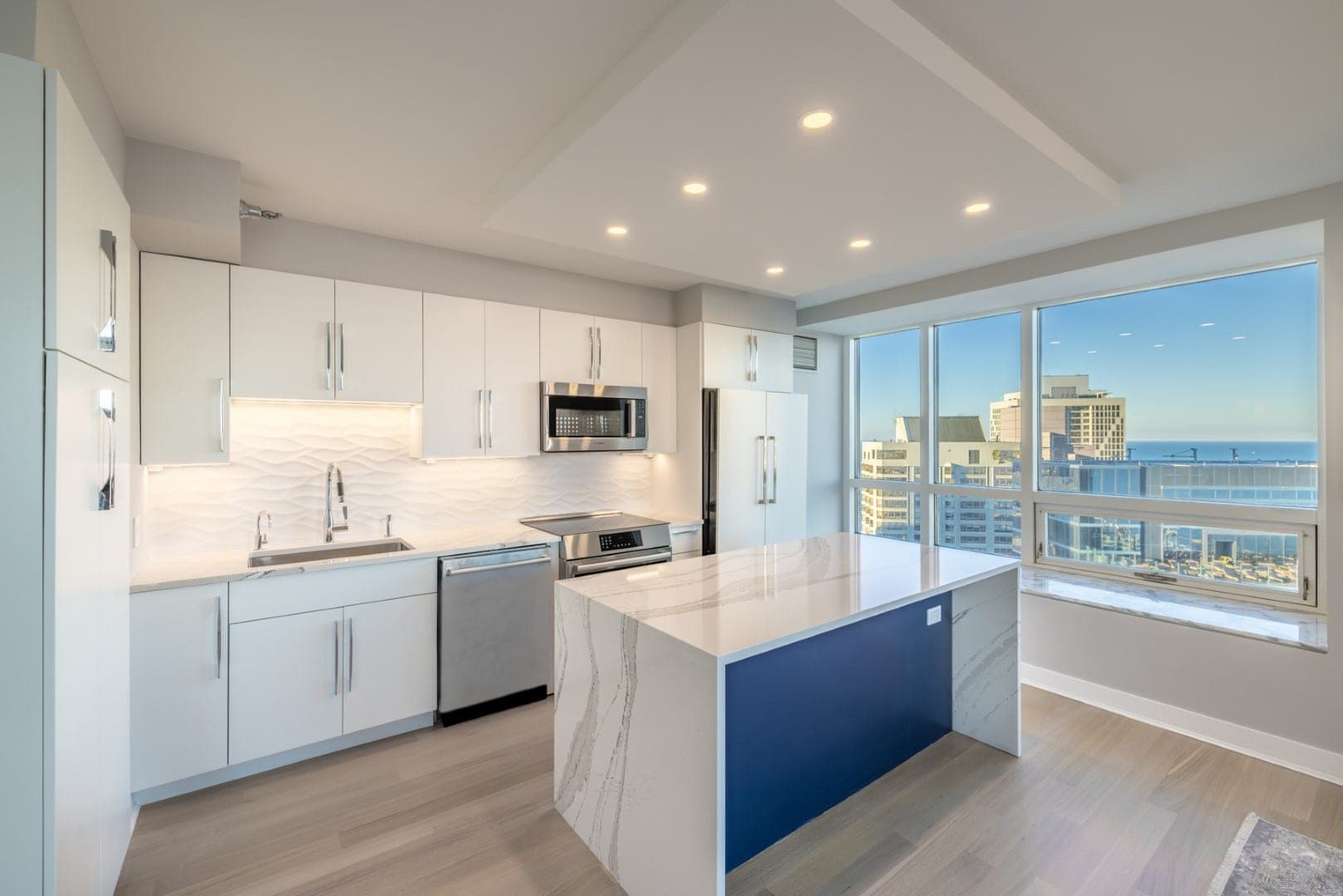
- 2 photosStreeterville Navy Island Condo Kitchenby MariusSee the project
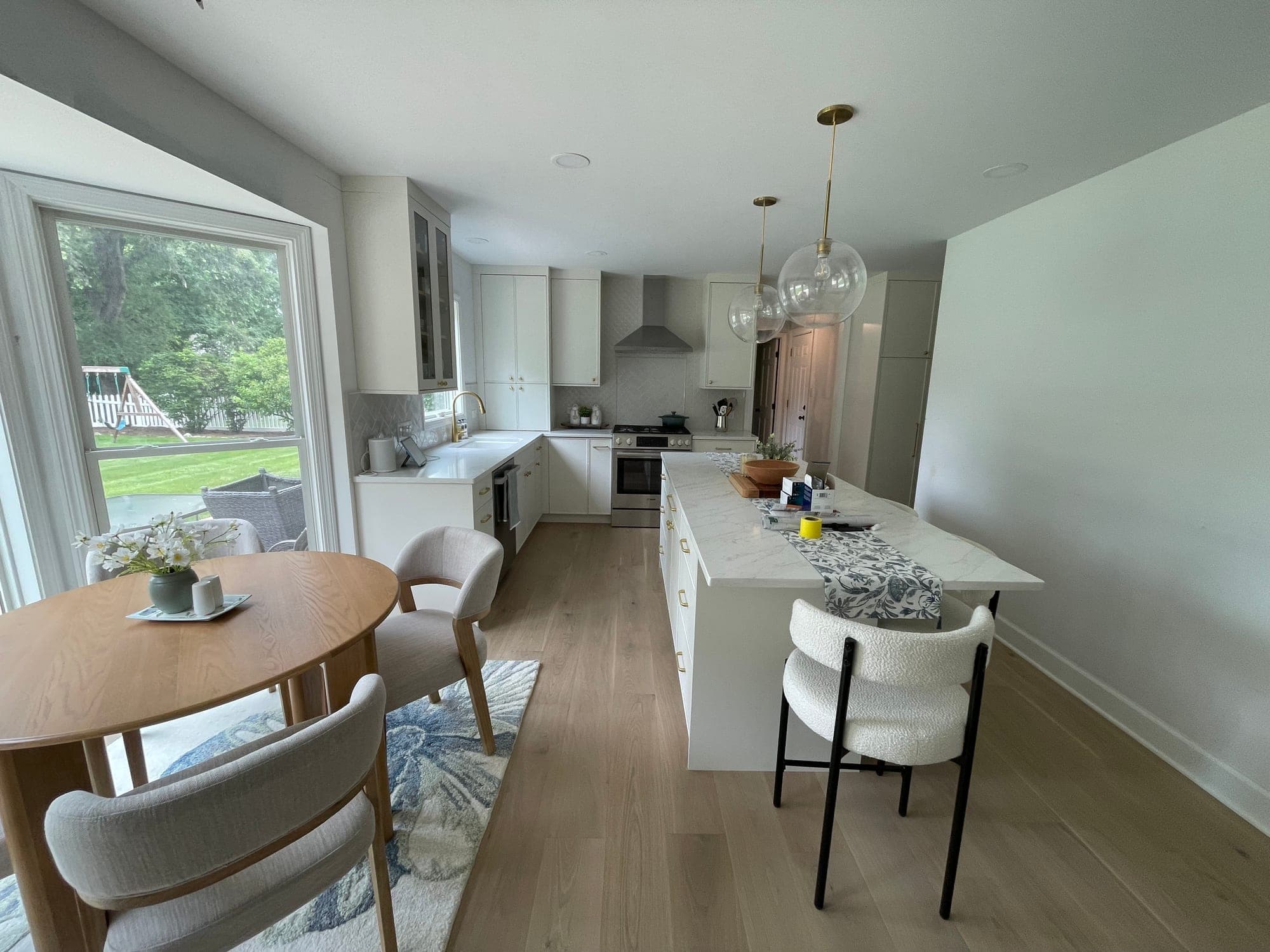
- 3 photosNaperville White Kitchen with Breakfast Bayby TomSee the project
Questions
Common questions about kitchen countertops.
Quartz or quartzite for a busy family kitchen?
Quartz if you want no upkeep and a consistent look. Quartzite if you want natural stone, will seal it about once a year and accept that every slab differs. Both handle daily cooking well; only quartzite should take a hot pan directly.
Why is there a gap between cabinets and countertops during construction?
Templating happens after every cabinet is installed and fixed, and fabrication typically takes one to two weeks after that. The pause is built into the schedule, and plumbing trim-out follows the tops.
Can a large island be done without a seam?
Often, up to the size of the slab, which varies by material. Beyond that a seam is placed where it is least visible, or the island is designed in two levels. We show you the options on the slab itself.
Do you install countertops on their own?
No. A countertop fabricator will template and install directly on cabinets that stay. We handle countertops inside a complete kitchen remodel, where the material is chosen with the cabinets and backsplash.
Let’s plan the whole room.
Have photos of your kitchen or bathroom? Include them with your inquiry for complimentary render previews within minutes. Photos are optional.
Prefer to talk first? Call or email during business hours.
- Call
- (312) 210-0016
Related
- All remodeling servicesEvery trade inside a kitchen or bathroom remodel, on one page.
- Custom cabinet designEvery box fixed in place before the template.
- Tile and backsplashChosen with the countertop so the two do not compete.
- PlumbingSinks, faucets and pot fillers connected after the tops go in.
- What a kitchen remodel costsThe three planning ranges and the factors behind them.